Pressure sore reconstruction is surgery to close deep pressure ulcers (bedsores), usually stage 3 or 4, over the sacrum, ischium or hip in bedbound, paraplegic or elderly patients. It involves removing the ulcer, infected bone and lining, then covering the defect with healthy flaps such as gluteal V-Y advancement or tensor fascia lata flaps.
- AnaesthesiaGeneral or spinal
- Hospital stayUsually 2 to 4 weeks
- Back to routineGradual sitting from about 5 to 6 weeks
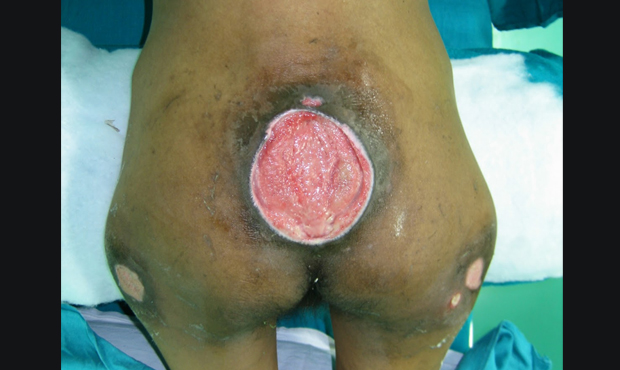
What is pressure sore reconstruction?
Pressure sores, also called decubitus or pressure ulcers, are wounds caused by sustained pressure on parts of the body, commonly the lower spine (sacrum), buttocks (ischium), outer hip (trochanter), heels, elbows and back of the head. Most diagnosed pressure ulcers are superficial (stage I or II) and are usually managed without surgery through pressure relief, debridement and careful wound care. Stage III and IV sores usually need surgery because they do not heal with medical treatment alone.
Surgery aims to heal the ulcer and remove the risks of an open wound. The ulcer, its lining (bursa) and affected bone are removed and the defect is covered with healthy tissue. The technique depends on the stage, type and site of the sore; options include direct closure, skin grafts, skin flaps, myocutaneous (muscle) flaps and free flaps. Muscle flaps fill dead space, improve blood supply, help antibiotics reach the tissue and act as a barrier against infection.
Dr. N. Jithendran's cases include single-stage excision and bilateral superior gluteus maximus V-Y advancement flaps for a sacral ulcer with trochanteric ulcers, grade IV sacral ulcers in young paraplegic patients after spinal injury or spinal tuberculosis surgery, a sacral ulcer after coronary bypass surgery, an ulcer in an elderly bedbound patient after stroke, and trochanteric ulcers covered with tensor fascia lata (TFL) flaps, including a patient who travelled from Africa for treatment.
Who is pressure sore reconstruction for?
- Patients with stage 3 or 4 pressure sores
- Stage 1 or 2 ulcers that fail to heal with non-surgical care
- Patients whose bacterial load has been reduced and nutrition optimised
- Any urinary fistula diverted and healed, and a diverting colostomy done if needed, before reconstruction
- Spasticity controlled before surgery
How is it done?
- Pre-operative optimisation: nutrition, correction of anaemia (for example with iron), spasticity medicines, turning schedule, wound cleaning and stopping smoking
- Radical excision of the ulcer and its bursa (often outlined with methylene blue) and removal of granulation tissue and affected bone
- Closure with skin flaps, myocutaneous flaps such as gluteus maximus V-Y advancement, or TFL flaps for trochanteric sores
- Free flaps or skin grafts in selected cases
- Single-stage surgery is possible in suitable patients
What is recovery like?
- Lie flat on an air-fluid, air or water mattress for about four weeks
- Semi-sitting from about week 5, then short periods of sitting (up to about 10 minutes) from week 6, checking the wound
- Pressure-relief lifts for about 10 seconds every 10 minutes when sitting
- Regular turning, perineal hygiene and daily skin moisturising
- Lifelong inspection of pressure areas to prevent recurrence
What are the risks?
- Recurrence of the pressure sore
- Wound dehiscence (reopening)
- Wound infection
- Haematoma or seroma
- Partial flap loss
Why choose Dr. Jithendran?
- Dual training in orthopaedics (MS) and plastic surgery (MCh, DNB), with hand and microsurgery experience from Ganga Hospital, Coimbatore
- Consults at five hospitals across Bengaluru, with 24×7 availability for emergencies
- Clear explanations in English, Tamil, Hindi and Telugu, and time to answer every question
- Strict sterilisation and patient-privacy standards
Frequently asked questions
Which pressure sores need surgery?
Stage 3 and 4 pressure sores, which extend through the skin into fat, muscle or bone, usually need surgery because they rarely heal with dressings alone. Stage 1 and 2 sores are usually managed with pressure relief and wound care, with surgery considered only if they fail to heal.
What is a flap for a pressure sore?
A flap is healthy tissue, often skin and muscle from the buttock or thigh, moved with its blood supply into the cleaned wound. Gluteus maximus V-Y advancement flaps are commonly used for sacral sores and tensor fascia lata flaps for hip (trochanteric) sores.
How should a patient be prepared for pressure sore surgery?
Good nutrition, correction of anaemia, control of infection and spasticity, regular turning and wound cleaning, and stopping smoking all improve healing. If there is soiling of the wound, a temporary colostomy or urinary diversion may be needed before surgery.
How long is recovery after pressure sore reconstruction?
Patients typically lie flat on a special air or water mattress for about four weeks, begin semi-sitting around week five and short periods of sitting from week six. Sitting time is increased gradually while the wound is checked for discolouration or separation.
Can pressure sores come back after surgery?
Yes, recurrence is the main long-term risk, especially if pressure is not relieved. Regular turning, pressure-relieving mattresses and cushions, pressure-relief lifts when sitting, good nutrition and daily skin checks are essential to protect the repair.
